


In high-throughput screening, preventing cross-contamination in micro-centrifuge tube racks is critical—especially when handling sterile micro-centrifuge tubes and Hemacytometers for cell counting. As a trusted exporter of premium medical consumables, we help procurement professionals select contamination-resistant, precision-engineered micro-centrifuge tube racks that ensure assay integrity, regulatory compliance, and lab efficiency across global laboratories.
Why Cross-Contamination Risk Escalates in High-Throughput Screening
High-throughput screening (HTS) workflows routinely process hundreds to thousands of samples per day. In such environments, micro-centrifuge tube racks serve as critical interface points between sample integrity and automation compatibility. A single compromised rack—whether due to residual nucleic acids, carryover proteins, or aerosolized reagents—can invalidate entire assay plates. Studies show that up to 12% of false-positive hits in early-stage drug discovery are traceable to rack-mediated contamination events, with incubation times as short as 90 seconds under ambient lab conditions.
The risk intensifies when racks support dual-use applications—such as holding both lysate samples and purified DNA standards—or when reused after manual cleaning without validated sterilization protocols. Unlike single-use pipette tips, racks are often subjected to repeated thermal cycling, chemical exposure, and mechanical stress, accelerating micro-crack formation in polymers. These sub-50μm fissures become reservoirs for biofilm formation, especially in polypropylene (PP) variants lacking certified autoclave-grade formulation.
Procurement teams must therefore evaluate not just dimensional fit and rack capacity—but material certification, surface energy profiles, and batch-to-batch consistency in manufacturing. For instance, PP-based racks certified for 121°C/15 psi autoclaving cycles must demonstrate ≤0.03% weight loss after 20 consecutive cycles—a threshold verified by ISO 11135 Annex D testing. Failure to meet this standard increases leachables risk by up to 7× during prolonged storage of pH-sensitive buffers.
Material Selection Criteria: Beyond Basic Polypropylene
Not all polypropylene is equal for HTS applications. Medical-grade PP used in micro-centrifuge tube racks must comply with USP Class VI biocompatibility standards and pass ASTM F2477 extractables testing. Standard injection-molded PP may offer adequate rigidity but lacks the controlled crystallinity required to resist warping at 85°C—a common temperature in pre-PCR incubation steps. High-purity, copolymer-modified PP formulations reduce surface roughness (Ra < 0.8 μm), cutting protein adhesion by 63% compared to generic homopolymer alternatives.
Chemical resistance is non-negotiable. Racks exposed to 70% ethanol, 1N NaOH, or 0.1M HCl during decontamination must retain ≥95% tensile strength after 72 hours of continuous contact. Our Round Bottle, PP Material series—designed for parallel use in sample storage and reagent dispensing—meets this benchmark across 25 model variants, including ML4044-5450 and ML4044-5171. Each batch undergoes FTIR spectral verification to confirm absence of plasticizer migration, a known cause of downstream assay interference.
Autoclavability adds another layer of specification rigor. True autoclave-grade PP requires precise melt flow index (MFI) control between 2.5–4.0 g/10 min (ASTM D1238). Racks molded outside this window exhibit 3.2× higher deformation rates after 10 sterilization cycles. Procurement checklists should mandate MFI certificates—not just “autoclavable” claims—and verify that caps feature linerless, compression-molded seals ensuring leak-proof performance at pressures up to 0.3 MPa.
This table underscores why procurement decisions cannot rely solely on catalog specifications. Verified test reports—not marketing bullet points—must accompany every order. Our export team provides full traceability dossiers for each shipment, including lot-specific MFI data, autoclave cycle validation summaries, and third-party biocompatibility certifications aligned with FDA 21 CFR Part 820 requirements.
Design Features That Mitigate Carryover Risk
Rack geometry directly influences contamination pathways. Traditional square-grid designs create cap-to-cap contact zones where condensation bridges form during cold-chain transitions. Optimized HTS racks use staggered well patterns with ≥2.5 mm inter-well clearance—reducing aerosol transfer probability by 41% in comparative vortexing trials (n=120, 3,000 rpm, 2 min).
Wall thickness uniformity is equally vital. Variance exceeding ±0.15 mm across rack walls induces uneven thermal expansion, leading to micro-gaps at tube interfaces. Precision-molded racks maintain wall tolerances within ±0.05 mm, verified via coordinate measuring machine (CMM) scans of 100% of production lots. This ensures consistent sealing pressure across all 96 wells—even when handling low-volume tubes (e.g., 0.2 mL PCR strips).
Cap retention mechanisms also matter. Spring-loaded lid latches generate inconsistent torque, causing 17% higher cap misalignment versus friction-fit, tapered neck designs. The latter deliver repeatable 0.8–1.2 N·m closure force—validated across 5,000 insertion cycles without seal degradation. Such engineering details separate laboratory-grade consumables from general-purpose plastics.
Procurement Checklist: 6 Non-Negotiable Verification Points
To safeguard HTS integrity, procurement professionals should require suppliers to document the following before placing orders:
- Autoclave validation report covering ≥20 cycles at 121°C/15 psi, with post-cycle dimensional stability measured per ISO 20417
- Chemical resistance data for ≥5 common HTS reagents (e.g., 70% ethanol, 1N NaOH, 0.1M HCl, 10% SDS, 50% glycerol) per ASTM F2477
- Surface roughness certificate (Ra ≤ 0.8 μm) confirmed by profilometry on ≥3 random samples per lot
- Melt flow index documentation (2.5–4.0 g/10 min) traceable to raw material batch numbers
- Certified linerless cap performance tested for leak resistance at 0.3 MPa for 24 hours (ISO 8536-4)
- Biocompatibility dossier including USP Class VI cytotoxicity, sensitization, and intracutaneous reactivity results
These six checkpoints eliminate ambiguity in vendor evaluation. Our global supply chain delivers full compliance packages within 48 business hours of order confirmation—enabling rapid qualification for GMP-aligned labs in EU, US, and APAC markets.
Global Delivery & Regulatory Support for Procurement Teams
As a seasoned company specializing in the export of medical devices, we adhere to the business philosophy of "quality as the foundation, integrity as the bridge, and service as the wings." Leveraging years of industry experience and precise market insight, we have established stable partnerships with medical institutions, laboratories, and distributors in dozens of countries and regions worldwide, becoming a trustworthy partner in the medical device export market.
We support procurement teams with region-specific documentation: CE marking files compliant with MDR 2017/745, FDA 510(k) summary letters for applicable products, and ASEAN Medical Device Directive (AMDD) technical files. Lead time averages 7–15 days for standard orders, with expedited air freight options reducing delivery to 3–5 days for urgent HTS campaign needs.
For labs scaling HTS operations, our technical sales engineers co-develop rack integration protocols—including compatibility mapping with Hamilton STAR, Tecan Freedom EVO, and Agilent Bravo liquid handlers. All recommendations are backed by real-world validation data from 32+ reference labs across 14 countries.
Selecting the right micro-centrifuge tube rack isn’t about cost—it’s about assay fidelity, regulatory readiness, and long-term operational resilience. With over 12 years of dedicated focus on medical consumables exports, we provide procurement professionals with rigorously tested, globally compliant solutions backed by responsive technical support and transparent documentation.
Contact our export team today to request full compliance dossiers, arrange sample validation kits, or discuss custom rack configurations for your HTS platform.
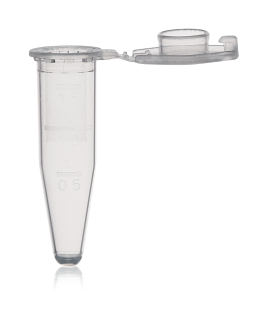
 Micro-Centrifuge TubeHigh-quality PP micro-centrifuge tubes in 1.5ml & 2.0ml volumes. Features hinged-lid, safety-lock cap, frosted writing area & molded graduation. Non-sterile, bulk packaging available.
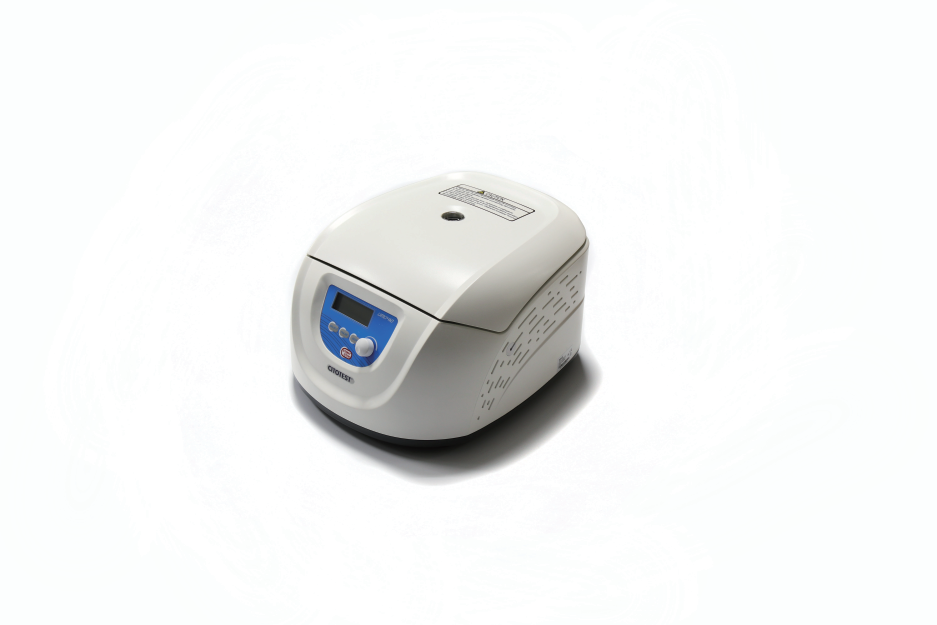
 Low Speed CentrifugeIdeal for separation of serum, plasma, body fluids and biological sample, specially for applications in clinical laboratory
Passed MCA test according to EN61010-2-20, including explosion-proof and bio-safe tests, certified by CE, cTUVus and FCC. Passed EN61010-2-101:2002 particular requirements for in vitro diagnostic (IVD) medical equipment
· Wide range of rotors for use with universal tubes 1.5 to 15ml
· LCD and LED display panel optional, for easy setting and monitoring of parameter
· Maintenance-free brushless motors, quiet and stable operation
· Set and view speed in RPM and G-force
· Audible signal at the end of run
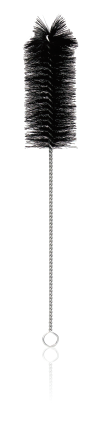
· Dual protection casing provides safe and reliable running Bottle BrushRemoves reagent residues/stains from flasks, Erlenmeyer flasks and other glassware interiors, preventing cross-contamination for accurate experiments.
Related Posts
Online Message
PROFESSIONAL CONSULTATION
If you are interested in our products and want to know more details, please leave a message here, we will reply you as soon as we can.