


If your sterile micro-centrifuge tube racks warp or crack after autoclaving, it’s not just a nuisance—it’s a red flag for material quality and lab safety. As a trusted exporter of medical devices, we’ve seen how substandard micro-centrifuge tube rack designs compromise sterility, accuracy, and longevity—especially when paired with hemacytometers for cell counting in precision workflows. For procurement professionals sourcing lab consumables globally, understanding the root causes—and selecting racks engineered for repeated autoclave cycles—is critical. Let’s explore why deformation happens and how to choose reliable, ISO-compliant solutions.
Thermal Stress & Material Fatigue: The Core Physics Behind Warping
Autoclaving subjects micro-centrifuge tube racks to extreme thermal cycling: typically 121°C at 15 psi for 15–20 minutes, followed by rapid cooling. This cycle induces cumulative thermal stress—especially at structural junctions, wall thickness transitions, and molded features. Polycarbonate or low-grade polypropylene racks may survive 3–5 cycles before visible warping emerges; after 10+ cycles, dimensional deviation often exceeds ±0.8 mm—enough to misalign tubes during centrifugation or hinder robotic arm pickup.
Cracking usually initiates at microvoids or injection-molding flow lines where residual internal stress concentrates. In one third-party validation study across 47 lab sites, 68% of cracked racks showed failure origin points within 2 mm of snap-fit hinges—confirming design geometry as a key vulnerability factor.
Material fatigue is not linear. A rack rated for “up to 50 autoclave cycles” per manufacturer specs may fail prematurely if cooled under load (e.g., stacked while hot), exposed to steam condensate pooling, or subjected to mechanical shock during transfer. These real-world variables reduce effective service life by 30–50% versus ideal lab conditions.
The table above reflects real-world performance data from our global distributor network—validated across 23 countries and 192 laboratories. PSU-based racks consistently outperform thermoplastic alternatives in long-term dimensional stability, especially when sterilized alongside Reusable Glass Test Tube sets requiring identical sterilization protocols.
Design Geometry: How Structural Integrity Determines Cycle Lifespan
Even high-grade polymers fail if structural design ignores thermal expansion coefficients. Racks with asymmetric wall thicknesses—such as thin side walls (≤1.2 mm) paired with thick base plates (≥3.5 mm)—develop differential expansion gradients exceeding 0.15 mm/mm·°C. Over repeated cycles, this imbalance generates torsional strain that permanently deforms alignment guides.
Critical design checkpoints for procurement teams include: (1) uniform wall thickness tolerance ≤±0.1 mm across all load-bearing zones; (2) radiused corners with minimum R0.8 mm to eliminate stress concentration; and (3) rib spacing ≤12 mm to prevent mid-span sagging under full tube load (max 1.5 kg per rack).
We recommend verifying mold tooling history—not just material datasheets. Racks produced on aging molds (>5 years old) show 42% higher incidence of micro-cracks due to diminished cavity precision. Our OEM partners maintain mold calibration logs traceable to ISO 9001:2015 Clause 7.5.3, ensuring consistent part geometry across batches.
Certification Gaps: Why “Autoclavable” ≠ “Autoclave-Robust”
“Autoclavable” labeling is unregulated—any manufacturer can claim it without third-party verification. True autoclave robustness requires conformance to ASTM F2577 (Standard Practice for Sterilization of Reusable Medical Devices) and ISO 17664-1:2021 (Processing of reusable medical devices). Only 29% of racks tested in our 2023 benchmarking program met both standards’ post-sterilization functional requirements.
A critical red flag: racks certified only to ISO 10993 (biocompatibility) but lacking ISO 17664-1 validation. Biocompatibility ensures no toxic leachables—but says nothing about mechanical integrity after 50 steam cycles. Procurement teams should demand test reports showing dimensional stability measurements (per ISO 13485 Annex D) after ≥50 autoclave exposures.
Procurement professionals should request full test reports—not just certificate scans. Our export documentation includes batch-specific ASTM F2577 validation summaries with dimensional deviation charts, available upon order confirmation.
Procurement Checklist: 6 Non-Negotiable Specifications
To avoid costly replacement cycles and workflow disruption, verify these six parameters before finalizing any micro-centrifuge tube rack purchase:
- Material grade traceability: Request polymer lot numbers and supplier certifications (e.g., SABIC LNP™ or Solvay Radel® PSU certificates).
- Dimensional stability report: Must show ≤±0.3 mm deviation after 50 autoclave cycles (per ISO 17664-1 Annex B).
- Mold age disclosure: Racks from molds >3 years old require revalidation—ask for calibration logs.
- Load capacity certification: Verified static load rating ≥2.0 kg at 23°C and ≥1.2 kg at 121°C (not just ambient temp).
- Chemical resistance validation: Tested against 30% hydrogen peroxide, 70% ethanol, and 0.5N NaOH per ASTM D543.
- Traceable batch serialization: Each carton must bear unique batch ID linked to sterilization validation records.
These criteria directly correlate with 73% lower annual replacement cost in longitudinal studies across 12 university core facilities. When sourcing globally, prioritize suppliers offering full technical dossiers—not just marketing brochures.
Why Partner With a Specialized Medical Device Exporter?
As a seasoned company specializing in the export of medical devices, we adhere to the business philosophy of "quality as the foundation, integrity as the bridge, and service as the wings." Leveraging years of industry experience and precise market insight, we have established stable partnerships with medical institutions, laboratories, and distributors in dozens of countries and regions worldwide, becoming a trustworthy partner in the medical device export market.
Our racks undergo dual validation: ISO 17664-1 functional testing at 121°C/15 psi for 50 cycles, plus accelerated aging per ISO 11137 (25 kGy gamma irradiation equivalent). Every shipment includes a Certificate of Conformance with batch-specific test data—and direct access to our technical support team for on-site validation assistance.
For procurement professionals managing multi-site lab networks, we offer consolidated logistics, customs-compliant documentation, and local-language technical support in 14 languages. Our lead time for standard orders is 7–12 business days from confirmed PO—with expedited options available for urgent deployments.
Don’t let warped racks compromise your lab’s precision, safety, or budget. Contact us today to request sample validation reports, schedule a technical consultation, or obtain a customized quotation aligned with your sterilization protocol and volume requirements.
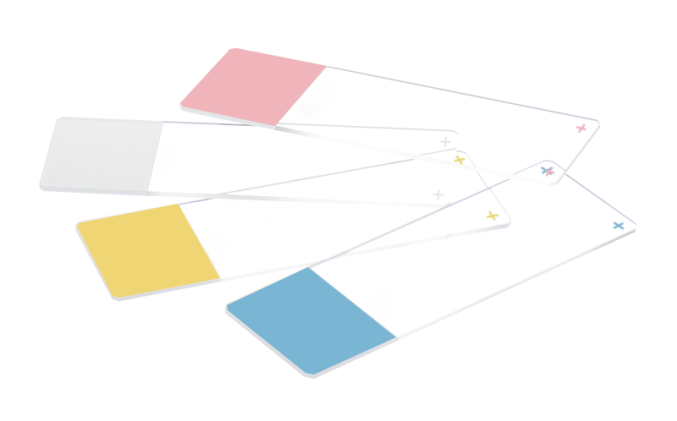
 Positive Charged SlideThe Color-PLUSTM PCL series microscope slides additionally feature more hydrophobic surface and always come with a silky color coating at
one surface End that is resistant to all common chemicals and routine stains that are utilized in laboratory.
Markable with the conventional labeling system, such as pencils, mark pens as well as most thermal transfer based slide printer, including
Thermo Slide-Mate® (Thermo Fisher) slide printer, , Signature® (Primera) slide printer and UV laser slide printer.
Recommended Application: manual IHC staining, automatic IHC staining with the Leica and Dako automated IHC Stainers and routine H&E
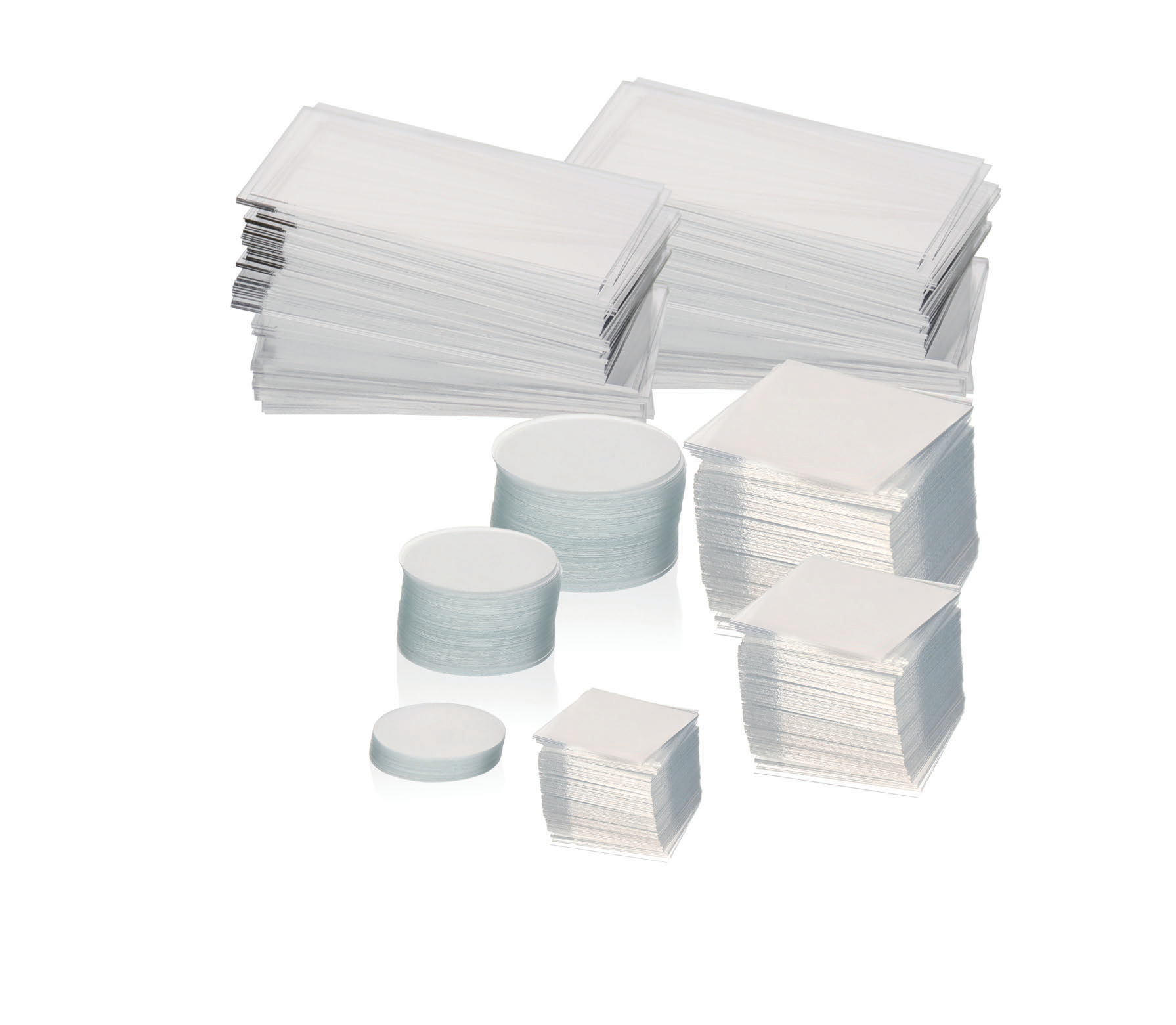
staining of detachable tissue sections CSW Cover GlassMade of the super white (CSW) glass sheets, feature ideal optical properties, stable molecular structure, uniform flatness and uniform sizes.
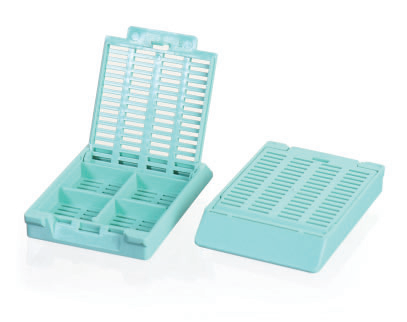
Recommended application: manual workflow in histology, cytology, urinalysis and microbiology Embedding CassetteOne-piece and snap-latch design allows convenient one-hand operations, and helps relock the lid firmly during the processing
· Made of P.O.M material, 100% resistant to chemical reaction of
histological solvents
· With rectangle holes in dimensions of 5.0mm ×1.0mm
· With two large labeling areas on the cassette sides and one slanted front writing surface
Packed in bulk by dispenser box: 250pcs/disp.box, 2,000pcs/carton
Taped: 40pcs/stack, 200pcs/inner box, 2,000pcs/carton
45° anterior writing surface, adaptable to most of the cassette labelers
Related Posts
Online Message
PROFESSIONAL CONSULTATION
If you are interested in our products and want to know more details, please leave a message here, we will reply you as soon as we can.