


How to prevent urine specimen container leaks during transport
A leaking urine specimen container can expose handlers to biological material, compromise sample integrity, and delay laboratory testing. For healthcare staff and laboratory operators, preventing leaks starts with choosing a suitable container, securing the lid correctly, and following appropriate transport packaging procedures. Even a small oversight, such as a damaged seal or an overfilled container, can create problems in transit.
The useful question is not simply whether the lid feels tight. It is whether the complete collection and transport setup will keep the sample contained when someone carries the bag sideways, a courier brakes sharply, or the package spends time in refrigerated storage. A container that sits dry on a bench has not necessarily proved it can withstand that journey.
Check the container and lid as a matched system
Use a container intended for urine collection and the planned transport conditions. A general-purpose cup with a snap-on cover may be convenient at collection, but convenience does not establish leak resistance. Look for manufacturer instructions covering closure, fill limits, storage conditions, and transport suitability. For urine culture, the laboratory may also require a sterile container; sterility and leak resistance are separate requirements.
Do not mix lids between container models, even when they look interchangeable. Thread pitch, rim geometry, and sealing surfaces can differ. A mismatched lid may turn several times and still fail to seat properly. Keep replacement stock organized by product reference rather than by appearance alone.
Before collection, inspect the rim, threads, body, and lid. Reject components with cracks, distorted edges, damaged threads, or a missing seal where the design requires one. Not every specimen cup has a separate gasket: some seal through direct contact between molded surfaces. The correct check depends on the actual design, not an assumed feature.
Our work supplying medical consumables to institutions, laboratories, and distributors across international markets makes product identification and clear instructions especially relevant. A description such as “screw-cap specimen cup” does not establish transport performance. Quality checks before supply, accurate product information, and accessible support are more useful than a broad promise that every cup is leakproof.
Most closure problems start at the collection point
An overfilled container leaves little room for liquid movement and can bring urine into contact with the sealing area during closure. Follow the marked fill limit or manufacturer instructions while collecting the volume required by the laboratory. There is no single safe fill percentage for every container and test. Preservative-containing containers may have a specified fill range that matters for both containment and analytical accuracy.
Give patients a brief, practical instruction before collection: keep the inside of the lid untouched, avoid filling beyond the indicated limit, and return the container securely closed. Where staff assist with closure, follow the local collection procedure and appropriate hand hygiene and glove practices. A lid placed face-down on a counter creates a contamination concern even if it later seals correctly.
For a screw-cap design, place the lid squarely over the opening and turn it without forcing. Cross-threading often feels resistant too early, before the lid reaches its normal seated position. If the cap tilts or leaves an uneven gap, do not simply apply more force. Correct the alignment using the approved handling procedure, or arrange replacement if the closure is damaged.
Tighter is not always safer. Excessive force can deform plastic threads or the sealing surface. Use the closure method specified by the manufacturer; do not invent a torque target or use tools unless the system explicitly requires them. Gloves, wet surfaces, and different hand strengths make “as tight as possible” an unreliable instruction.
Check that the cap sits evenly and that no label, tissue, or other material is trapped between the lid and rim. Keep labels clear of the sealing interface and follow laboratory requirements for placing identification on the container body. Tape across the cap may provide tamper evidence in some workflows, but it should not be treated as a repair for a faulty seal.
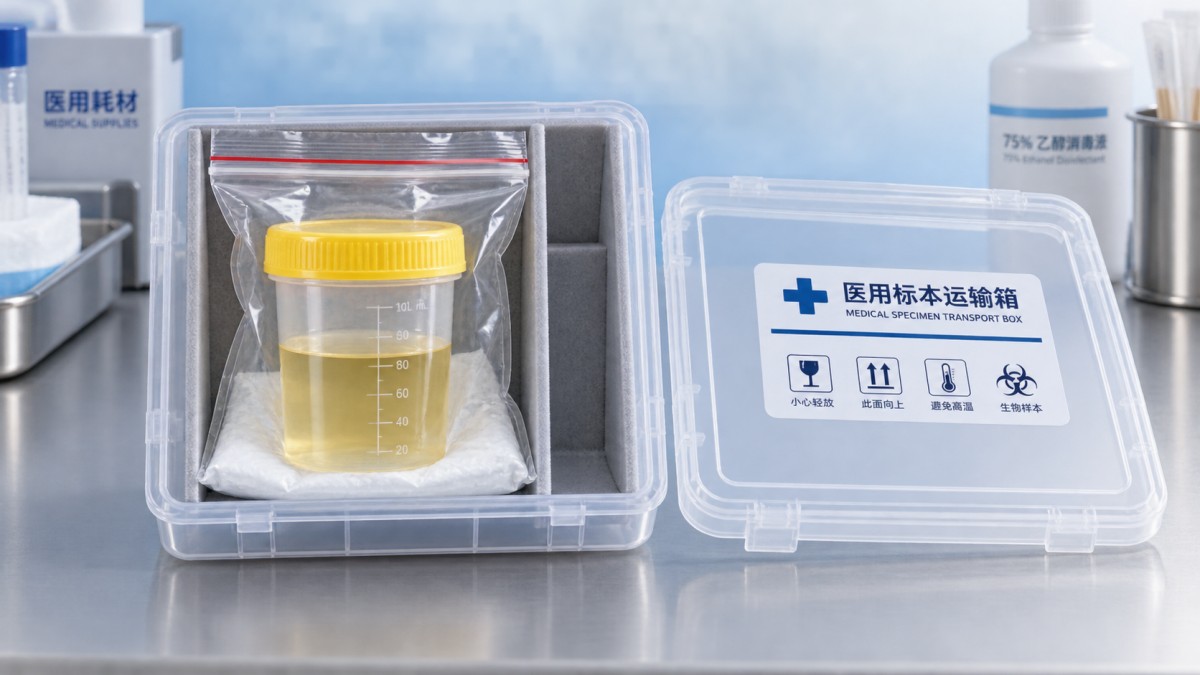
Build a second barrier before the sample moves
The primary container holds the specimen. Secondary packaging contains a spill if that first barrier fails. Keeping those functions separate prevents a common mistake: assuming that a closed specimen bag makes a poorly closed cup acceptable.
For routine movement within a facility, use the containment system specified by your infection prevention and laboratory procedures. Typically, this includes a securely closed primary container inside a suitable secondary bag or carrier. For off-site shipment, packaging must also match the specimen classification, transport mode, and applicable requirements. A routine ward-to-laboratory bag should not automatically be used for a road or air shipment.
Where required, include enough absorbent material between the primary receptacle and secondary packaging to absorb the liquid contents. Place paperwork in a separate document pocket so a spill does not contaminate it. Absorbent material is a backup measure, not permission to dispatch a cup that is already wet or leaking.
- Keep containers upright using a compatible rack, divider, or transport carrier.
- Separate multiple cups so their lids and bodies do not strike one another.
- Close the secondary packaging fully; check its zipper, adhesive closure, or latch.
- Use suitable outer protection where crushing, drops, or vehicle movement are foreseeable.
- Confirm that the receiving laboratory accepts the selected packaging and collection system.
For specimens classified as Biological Substance, Category B, the applicable P650 or PI650 instructions set requirements for the packaging system, including pressure resistance for liquid specimens. The precise requirements depend on transport mode and current rules. Do not assume that any individually described “leakproof” cup satisfies the complete shipping requirement; verify the relevant documentation with trained shipping personnel.
A laboratory holder is not automatically a transport restraint
Bench equipment should be used for its intended task. For example, the PP Support Holder for Separatory Funnel, model ML4514-990, supports separating funnels with diameters of 50–120 mm on 12.5 mm or 9.5 mm rods. Its front opening provides a clear view, and two tapered wedges provide grip on the rod. Those features serve a laboratory setup; they do not establish suitability for restraining urine cups during transport. Use a carrier designed for the specimen container instead of adapting an unrelated holder.
Account for the actual route, not just the handover
A short walk from a collection room differs from a courier route with several stops. Before dispatch, consider where the package will sit, how it will be carried, and whether it may encounter vibration or temperature changes. Do not assume “keep upright” labels will prevent tipping; the packaging still needs to contain the sample if its orientation changes.
Temperature control must follow the test requirements. Some specimens need prompt processing, refrigeration, or an approved preservative system. Do not freeze urine simply to make it easier to transport: freezing can affect testing and may stress a container not designed for that use. If coolant is required, arrange it within the approved packaging so it does not damage the cup or compromise labels.
Pneumatic tube transport needs its own assessment. Acceleration, vibration, and impact differ from hand carrying. Use only container and carrier combinations accepted under the facility’s validated procedure. When evaluating a new cup, designated
Related Posts
Online Message
PROFESSIONAL CONSULTATION
If you are interested in our products and want to know more details, please leave a message here, we will reply you as soon as we can.