


Start with the real answer: yes, but only inside the tube’s own limits
If you are asking can you centrifuge 1.5 ml tubes, the short answer is yes, very often you can. The unsafe part is assuming that every 1.5 ml tube can handle the same rotor, the same speed, and the same sample type. That is where cracks, popped caps, leaking aerosols, and lost samples usually start.
A 1.5 ml tube survives centrifugation when four things line up: the tube material is rated for the force you plan to use, the rotor pocket actually supports the tube shape, the fill volume is sensible, and the run conditions do not add avoidable stress. Operators who treat all microtubes as interchangeable usually discover the difference after a failure, not before.
So before loading the centrifuge, work through a practical check instead of relying on habit.
Check the tube rating before you look at the centrifuge settings
The first question is not rotor speed. It is whether the tube itself is intended for centrifugation at the force you need. Good tubes are usually supplied with a maximum RCF or centrifugal resistance value. That is the number that matters, not just rpm on the instrument display.
If the packaging or product sheet does not state a centrifugation limit, do not assume it is suitable for high-speed work. A 1.5 ml tube used for light bench handling may look identical to one designed for higher g-force, but the wall thickness, resin quality, and cap hinge strength may not be the same.
- Find the tube’s maximum RCF in the product specification.
- Compare that value with the actual RCF at your rotor radius, not a guessed rpm.
- Check whether the limit changes with temperature, chemical exposure, or repeated spins.
A surprising number of tube failures come from running a tube at a force it was never designed to see.
Make sure the rotor pocket fits the tube body and shoulder
This is the next place operators get into trouble. A tube can be technically centrifuge-safe and still fail because the rotor cavity does not support it correctly. If the pocket is too wide, the tube leans. If the bottom shape does not seat properly, the force concentrates at one point instead of spreading through the tube wall.
Look at the tube in the rotor before the run starts. It should sit fully down, without wobble, and the side wall should not be pinched. If adapters are required, use the adapter designed for that tube format rather than improvised sleeves or tissue packing. Soft makeshift padding can shift during acceleration and leaves the tube unsupported when the load matters most.
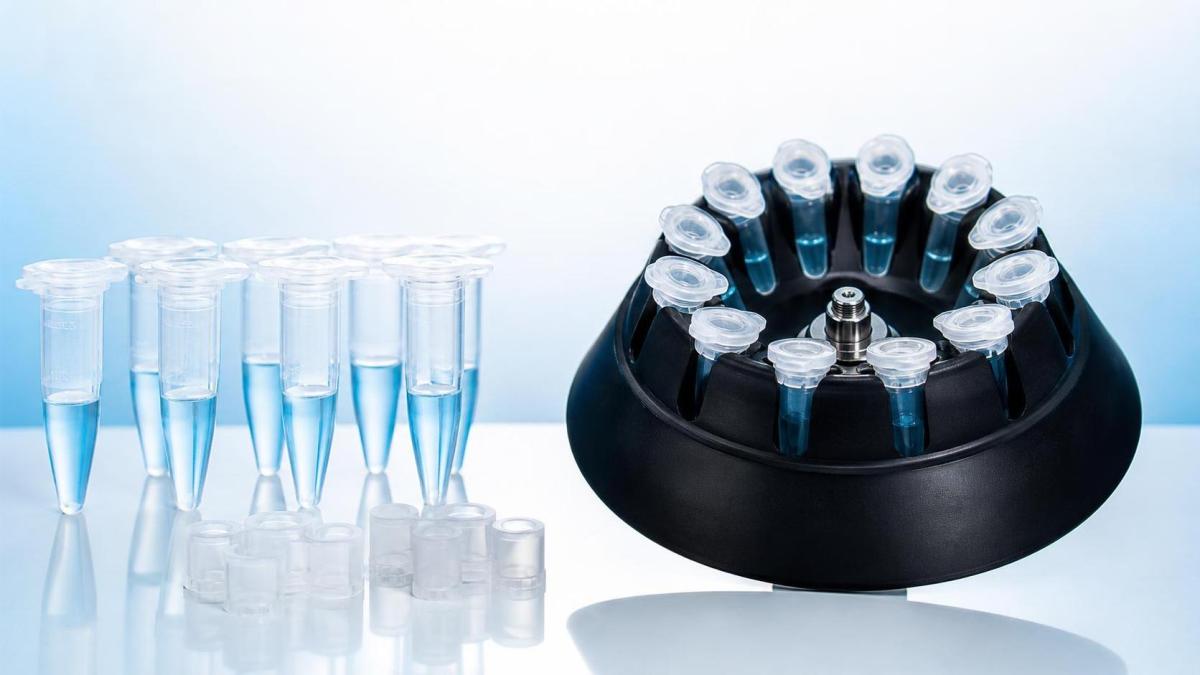
For fixed-angle rotors, poor fit is even less forgiving because the side of the tube takes more of the load. In swing-out systems, a badly matched insert can still cause deformation at the base or cap area. Different rotor geometries stress the same 1.5 ml tube in different ways, so “it worked in another centrifuge” is not a reliable check.
Do not fill to the brim and expect the cap to save you
Nominal volume and practical spin volume are not always the same. A 1.5 ml tube filled right to the top leaves very little headspace, and once the sample warms, foams, or shifts under force, the cap seal becomes the weak point. Leakage does not always look dramatic. Sometimes it is just a thin film around the cap and hinge, which is enough to contaminate the rotor and compromise the sample.
If the sample is viscous, protein-rich, volatile, or prone to frothing, leave more headspace than you would for a simple aqueous solution. Also check that the cap is fully snapped shut before loading. Half-closed caps are common during repetitive prep work.
Balance by mass, not by eye
Two tubes that look equally full are often not balanced. Density differences matter, and so does the weight of added reagents or pellets. Small tubes make people casual because the volumes look minor, but imbalance at high speed still stresses the rotor, the motor, and the tube walls.
A quick operator rule works well:
- Prepare opposing tubes with the same tube type.
- Match liquid mass as closely as your workflow allows.
- Place them symmetrically in the rotor, not just in any two empty spots.
If the centrifuge starts with noticeable vibration, stop the run early and recheck. Tubes sometimes survive one badly balanced run and fail on the next.
Watch for chemical and temperature effects
Tube strength is not only about g-force. Some solvents, oils, strong reagents, and repeated freeze-thaw cycles can make plastic more brittle or soften seals. A tube that is acceptable for one aqueous sample may not be a safe choice for another matrix.
This becomes important when operators reuse habits across different benches. Molecular prep, serum handling, and solvent-containing workflows do not stress the same consumables in the same way. If a run includes cold centrifugation, check whether the tube’s rated use covers that temperature range and whether the cap remains secure at low temperature.
Know the failure signs before they become a spill
Most tube failures give a warning first. Operators should pause when they see any of these:
- White stress marks near the shoulder or hinge
- Fine cracks around the cap rim
- Tube distortion after a previous spin
- Liquid residue on the outside of the tube after centrifugation
- Unusual rotor vibration or noise during acceleration
Once a tube shows stress whitening or shape change, retire it from critical work. Running it again to “get one more use” is a cheap decision that often becomes an expensive cleanup.
A simple pre-run checklist that actually catches most problems
Do not confuse collection tubes with microcentrifuge tubes
This mix-up happens more often than people admit, especially in shared work areas. Blood collection tubes and 1.5 ml microtubes are built for different formats, different rotors, and different handling patterns. A product such as Plain Tube, used in biochemistry, immunology, and serology workflows, is intended for clinical blood collection and comes in sizes such as 2 ml to 10 ml with PET or glass options. That is useful in the broader sample chain, but it is not a substitute for a 1.5 ml microcentrifuge tube just because both may enter a centrifugation workflow.
The same applies in reverse. A small bench tube should not be dropped into a setup intended for larger collection formats without the correct rotor support. Operators save time when they keep tube families clearly separated by application instead of treating them as generic plasticware.
When you should stop and change the setup
Change the tube, adapter, or run conditions if any of the following is true:
- The tube has no published centrifugation limit.
- The rotor cavity does not fully support the tube.
- Your protocol requires higher force than the tube is rated for.
- The sample chemistry may attack the tube material or cap seal.
- You are reusing tubes that already show stress from earlier runs.
At that point, the answer to can you centrifuge 1.5 ml tubes is still yes in principle, but not with that exact combination of tube, rotor, and run conditions.
The safest order of checks
Use this order on the bench: verify the tube rating, confirm rotor fit, set the target RCF, leave sensible headspace, balance by mass, then inspect the tube again after the run. That sequence catches most avoidable failures before they cost you a sample or contaminate the centrifuge.
If a setup only works when everything goes perfectly, it is not a robust setup. In routine lab work, the safer choice is usually the one that gives the tube more support, more margin, and less stress.
Related Posts
Online Message
PROFESSIONAL CONSULTATION
If you are interested in our products and want to know more details, please leave a message here, we will reply you as soon as we can.