


Start with the actual workload, not the catalog description
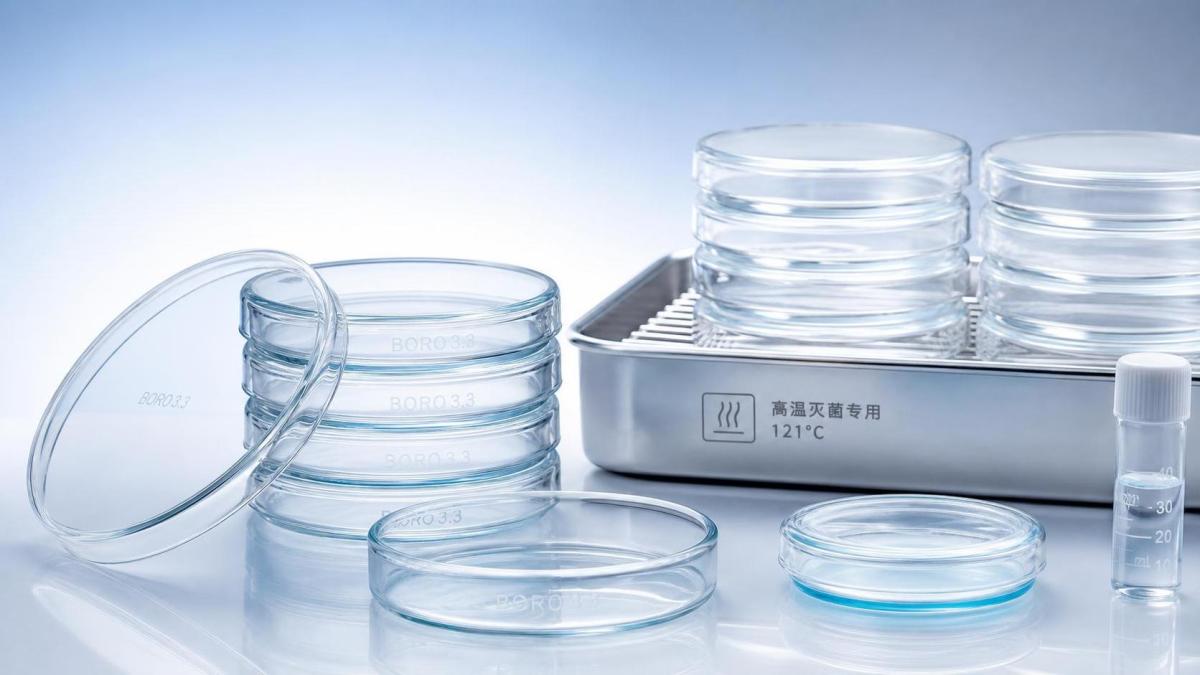
When a lab is deciding between reusable and disposable cultureware, the right question is rarely “Which dish is cheaper?” It is usually “Which dish will still behave the same after repeated use, sterilization, handling, and observation?” That is where a glass petri dish set still makes sense for many technical teams.
If your workflow includes repeated culturing, dry heat or autoclave exposure, routine microscopy checks, and strict contamination control, glass gives you a more stable platform to evaluate. Not for every application, and not just because it is reusable. It is a better choice when the cost of variation, warping, haze, or micro-damage is higher than the convenience of single-use ware.
A practical evaluation should follow the workflow below.
Check whether your sterilization cycle is driving the decision
This is usually the first separator. If dishes will go through repeated heat sterilization, material stability matters more than purchase price.
- Review the actual sterilization method in use: steam autoclave, dry heat, or mixed cycles depending on the lab section.
- Check whether lids and bases must maintain fit after multiple cycles, not just one pass.
- Look for any history of deformation, clouding, or sticking in the current dish type.
Glass is valuable here because it generally holds shape and surface clarity better under repeated thermal stress. For technical evaluators, that means fewer variables introduced by the container itself. A dish that survives heat but no longer sits flat or closes consistently is already creating process drift.
Judge optical clarity the way the lab actually uses it
Clear viewing is one of the most underrated reasons teams return to glass. In repeated culturing work, small visual differences matter: early colony formation, contamination traces, medium uniformity, or surface residue after cleaning.
Do not assess clarity by looking at an empty dish under office light. Put it into the actual observation context. Place media inside, stack several units, and inspect under the same bench lighting or optical setup used during routine work. What you want to know is simple: does the dish stay easy to read after real handling and repeated cleaning?
This is where some buyers make a bad comparison. They compare a brand-new disposable dish with a reusable glass set after months of service. The fair comparison is new versus new, then used versus used after the expected number of cycles.
Look at contamination risk in the full handling chain
A reusable dish is only as reliable as the cleaning and segregation process around it. Glass performs well, but it does not correct weak handling discipline.
Review these points before approving a switch or expansion:
- How used dishes are collected after culture work.
- What cleaning agents contact the surface before sterilization.
- Whether residues from detergents or chemicals can remain on the dish.
- How clean and dirty items are separated during turnaround.
A useful side tool in this process is labeled liquid handling for chemical disposal and rinse workflows. For example, Safety Wash Bottle units are offered with recognizable chemical printing, self-venting design, and color-matched closure marking to reduce mix-ups between contents. That does not replace validation of your cleaning process, but it can reduce one of the common failure points in shared lab spaces: cross-contamination caused by poorly identified rinse or waste bottles.
Evaluate surface durability, not just breakage risk
People often reduce glass selection to one concern: “Will it break?” That matters, but it is not the only durability issue. In culturing work, the surface has to remain chemically stable, cleanable, and visually consistent.
Ask for an inspection routine that checks for:
- Chipped rims that can compromise lid fit
- Scratches that trap residues or interfere with observation
- Clouding after repeated wash-and-heat cycles
- Base instability on flat work surfaces
A technically acceptable reusable set is one you can sort quickly: keep, reprocess, or retire. If defects are hard to see until they affect culture quality, the evaluation standard is too loose.
Confirm that size consistency supports your workflow
For repeated lab work, dimensional consistency matters more than many procurement teams expect. Stacking behavior, incubator loading, lid seating, and storage all depend on repeatable size and fit.
Technical evaluators should compare samples from the same set instead of one unit only. A dish that looks acceptable by itself may still introduce friction if stack height varies, lids bind when warm, or nesting is inconsistent after sterilization. Those are small issues until they show up hundreds of times in a month.
Use lifecycle cost, not unit price, as the real comparison
A glass petri dish set is rarely the lowest-cost option at the time of purchase. That is not the useful comparison. What matters is total cost across the expected service cycle, including cleaning labor, sterilization load, replacement rate, storage, and the cost of process interruptions.
This is usually where reusable glass wins or loses honestly. In a disciplined lab with stable reprocessing, it often performs very well. In a setting with weak turnaround control, the theoretical savings may never materialize.
Check compatibility with the rest of the bench process
Do not evaluate culture dishes in isolation. Review adjacent items: racks, sterilization loading patterns, wash bottles, chemical labels, drying space, storage trays, and handling tools. Many reuse programs fail because the dish itself is suitable, but the surrounding process is improvised.
If hazardous chemicals are part of post-use handling, color-coded support items can help reduce operator error. The same Safety Wash Bottle line includes 1500 mL options with a 28 mm closure and multiple color variants, which is useful when teams need visible separation between chemical types during disposal or rinse preparation. That is relevant only if your bench process already relies on visual segregation; otherwise, it is just extra inventory.
Run a short acceptance test before standardizing
Before rolling a glass petri dish set into routine use, run a small internal check using your own media, sterilization cycle, observation method, and cleaning sequence. Not a theoretical review. A real-use test.
The acceptance checklist should be practical:
- Initial visual clarity and dimensional fit
- Condition after repeated heat exposure
- Ease of cleaning and residue detection
- Handling comfort when wet, hot, or stacked
- Retirement criteria for damaged units
That final point matters. If the lab cannot define when a reusable dish should be removed from service, the evaluation is incomplete.
Make the decision in the same order the lab will feel the pain
For repeated lab culturing and heat sterilization, glass usually earns its place when four conditions are true: the lab needs stable performance across many cycles, clear observation matters, the sterilization process is routine and controlled, and the team can manage reusable inventory without confusion between clean and used items.
So the decision order should be straightforward. Start with sterilization method. Then verify visibility after use, not before use. After that, review contamination control around cleaning and handling. Only then compare cost across the expected life of the set. That sequence will tell you much more than a price sheet ever will.
Related Posts
Online Message
PROFESSIONAL CONSULTATION
If you are interested in our products and want to know more details, please leave a message here, we will reply you as soon as we can.