


Embedding Consumables Checklist for New Histology Labs and Expanding Facilities
Setting up a new histology lab or expanding an existing facility requires more than equipment selection—it demands a reliable plan for embedding consumables that supports workflow efficiency, specimen integrity, and consistent output. For project managers and engineering leads, a well-structured checklist helps reduce procurement risks, avoid operational delays, and ensure the lab is ready for stable, high-quality performance from day one.
The mistake many teams make is to focus on the embedding center as if it were a single workstation. In practice, it is a chain of small dependencies: cassette handling, paraffin workflow, waste removal, label visibility, cleaning routines, and the physical space around the embedding station. If any of those pieces are under-specified, the lab usually feels it later as queue buildup, specimen mix-ups, or unnecessary downtime during peak processing hours. That is why embedding consumables should be chosen as part of the workflow design, not after the floor plan is fixed.
The starting point is usually the volume profile. A small satellite lab may only need modest daily throughput, but an expanding facility often faces a different reality: larger batch sizes, more frequent shift changes, and more hands working the same bench area. In those settings, consumables that look interchangeable on paper can behave very differently on site. A container that is too small creates overflow; one that is too large becomes awkward to place near the embedding line. A waste bin that works in a quiet room may become impractical once the station is moving continuously through morning rush and post-run cleanup.
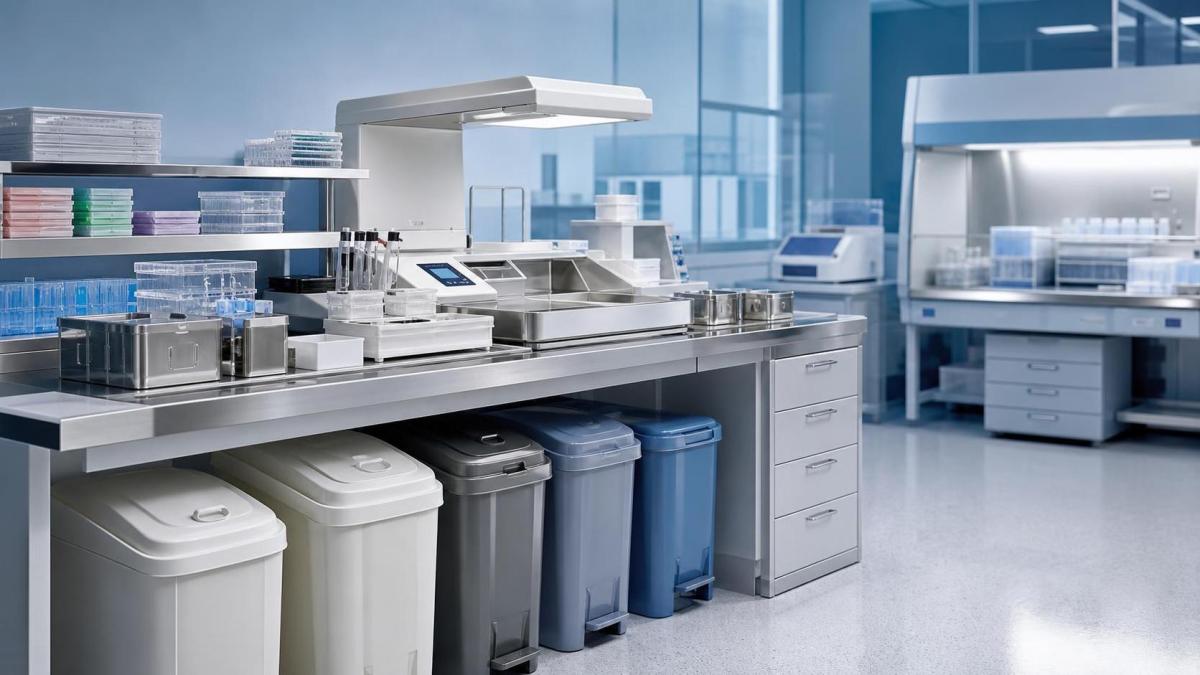
This is where maintenance behavior matters as much as capacity. Histology teams deal with wax residue, trimming debris, and other dry waste that accumulates around the workstation. Indoor storage for dry, flammable waste is not an abstract requirement; it is part of everyday housekeeping. A product such as the Lab Trash Bin is relevant here not because it is a centerpiece item, but because embedding areas need waste containers that fit the room’s pace, resist impact from frequent use, and remain easy to clean after repeated handling. High-strength fiberglass, heat-resistant behavior, and an impact-proof structure are practical advantages in rooms where the bin may sit close to warm surfaces, cart traffic, and busy operators.
In a new build, the sizing decision is usually straightforward only if the room layout is simple. Once the lab expands, the choice becomes more nuanced. A 7qt bin may suit a compact side station or a low-volume area, while 28qt and 40qt formats are more sensible where waste accumulates quickly and staff do not want to interrupt the embedding run every few minutes. The 14qt and 28qt options often sit in the middle ground, which is useful when the same room handles both routine cases and higher-intensity batches. That flexibility matters in mixed-use labs, including facilities that share space with adjacent pathology or processing functions.
Color and surface finish sound secondary until you deal with real cleaning intervals. Beige, black, and grey finishes are not just visual choices; they affect how well the room stays organized and how obvious wear becomes over time. A textured surface helps hide scratches, which is useful in high-traffic areas where bins are moved, repositioned, or brushed against carts. Rounded corners also make cleaning easier, especially around stations where paraffin fragments and dust collect at edges. These are small details, but embedding rooms tend to punish small oversights more than large equipment rooms do.
The biggest operational risk is usually not the wrong product category; it is misjudging the room’s rhythm. Teams sometimes specify consumables based on ideal usage, then discover that the actual shift pattern, cleaning schedule, or waste handling route is different. For example, if waste disposal happens only at set intervals, a compact container can become a bottleneck. If the station is near a heat source or a high-traffic passage, a fragile unit becomes a recurring maintenance issue. When those factors are ignored early, the lab pays for them later in labor and workflow interruptions rather than in the purchase order.
This is also why expanding facilities should think in zones, not just in totals. A central embedding area, a backup bench, a specimen-prep corner, and a cleanup point do not need identical consumables. They need a consistent logic: enough capacity for the local task, easy movement between stations, and materials that survive repeated cleaning without looking degraded after a short period. That is often more useful than trying to standardize every item across the whole department.
The practical checklist is therefore less about buying everything in bulk and more about matching each station to its operating conditions. Confirm how often waste is generated, where it is stored before disposal, how close the bin sits to heat exposure, and whether staff need a compact or higher-capacity format. If the lab is still in commissioning, this is one of the easiest areas to under-specify because the items seem simple. In reality, they influence cleanliness, safety discipline, and the smoothness of the embedding workflow every day.
For teams planning a new histology lab or adding capacity to an existing one, embedding consumables should be selected with the same discipline used for core instruments. The right choice is usually the one that fits the room’s real operating pattern, not the one that looks adequate in a catalog. That is especially true for waste handling around the embedding bench, where durability, cleanability, and capacity all show up in daily performance long before they show up on a spreadsheet.
Related Posts
Online Message
PROFESSIONAL CONSULTATION
If you are interested in our products and want to know more details, please leave a message here, we will reply you as soon as we can.